
Eagan City Directory Holdings and Access
The clearest verified Eagan city directory evidence is the Minnesota Historical Society, or MNHS, inventory of Dakota County telephone directories. It describes alphabetical white pages for residential and business listings, with phone numbers and street addresses, and yellow pages arranged by business subject. The inventory has about 1,237 volumes and 226 microfiche. It is open for research, but it is not a page-by-page viewer. Ask for the listed print or fiche item before treating a name or address as a result.
| Collection | Years | Where Held | Access |
|---|---|---|---|
| Dakota County telephone-directory inventory | County collection begins 1928; Eagan items 1964-2011 | Minnesota Historical Society | Finding aid, then request print or fiche |
| MNHS directory search service | Up to five selected years for one city | MNHS staff request | City Directories $10, Telephone Books $10, or both $20 |
| DCHS newspapers and historical indexes | Newspaper microfilm back to the 1850s; item dates vary | Lawshe Memorial Museum | Search records or ask research staff |
| DCHS census and plat holdings | Census 1849-1940; plats 1879-present | Lawshe Memorial Museum | Research collection, appointment encouraged |
| Eagan Historical Society materials | Continuously added; item dates vary | Municipal Center and 1914 Town Hall Museum | Local-history contact and displays |
Not every calendar year has the same kind of item. A finding-aid absence, a yellow-pages-only volume, or an alphabetic listing that omits a name is a coverage fact, not proof that a person was not in Eagan. The collection should be searched as a dated set of physical or fiche sources.
Verified Eagan City Directory Telephone Years
MNHS documents an Eagan telephone-book run from 1964 through 2011. The early group includes 1964 and 1966 through 1973, while 1965 is not listed in the Eagan entries. Later years change format often: 1974 and 1975 have print plus yellow-pages material, 1981 has print, yellow-only, and fiche references, and several years in the late 1980s and 1990s have multiple print or fiche references. Those format notes matter when a searcher expects one simple annual volume.
By the final stretch, some entries are yellow-only. The 2008 and 2009 references include yellow-only and print items, 2010 is yellow pages only, and 2011 has both print and yellow pages. White pages are the better starting point for an historical household or telephone line. Yellow pages identify businesses by subject, so they should not be read as a list of people at an address.
- 1964: first verified Eagan item in the MNHS finding aid.
- 1965: no Eagan entry listed, a documented gap rather than an absence of local people.
- 1974-1975: print and yellow-pages material are both listed.
- 2008-2010: the run includes yellow-only references, with 2010 yellow pages only.
- 2011: the verified run ends with print and yellow-pages items.
MNHS's Dakota County telephone-directory finding aid is shown in this Eagan city directory reference image.
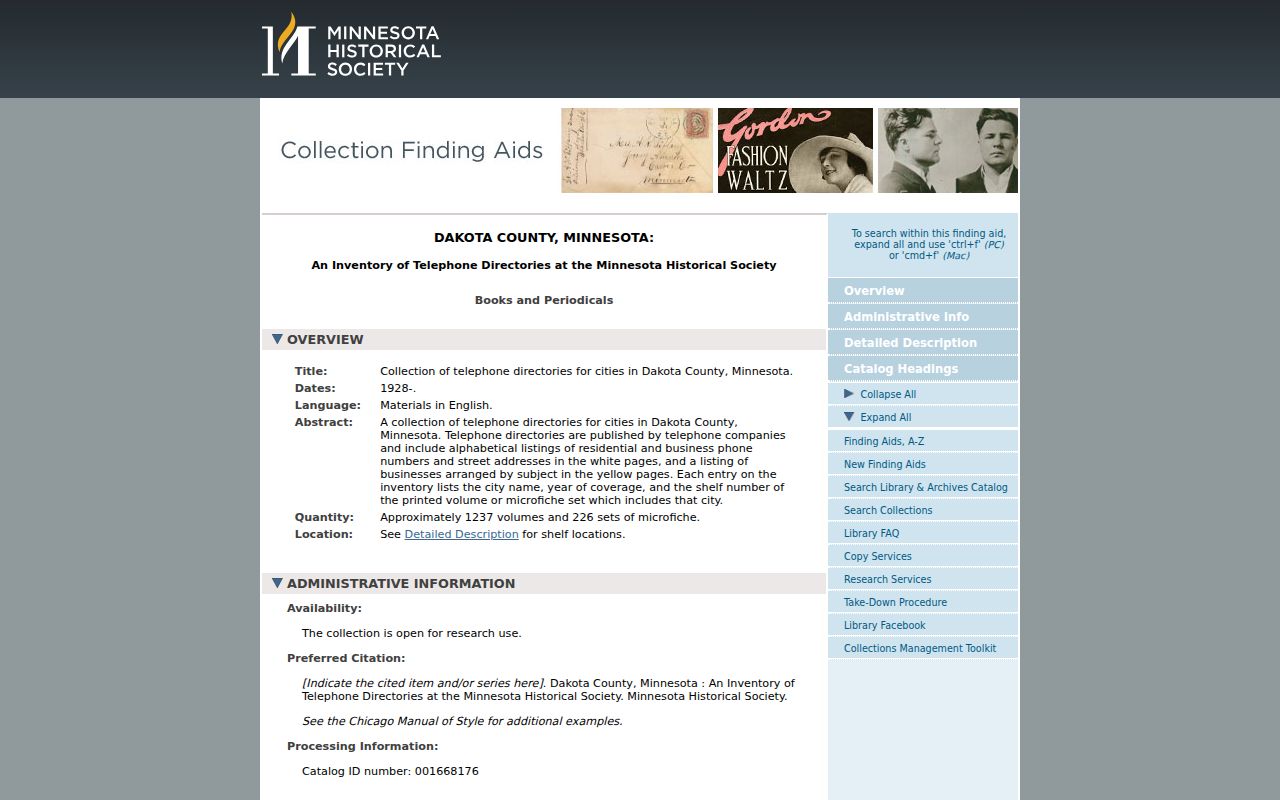
The item list is a practical way to choose an exact volume or fiche request, especially where one year appears in more than one format.
Note: Record the year, format, volume reference, and whether the listing came from white or yellow pages before comparing it with another source.
Eagan City Directories Are Not a Proven Polk Run
No official source reviewed for Eagan confirms a standalone year-by-year Polk, reverse, or criss-cross directory series. That distinction protects a historical search from an easy mistake. The verified local address-to-name evidence is the telephone-book run, not an assumed published city directory with every familiar feature.
A reverse or criss-cross lookup may still be available inside a particular telephone book or a county historical-society item. Ask MNHS or the Dakota County Historical Society which exact book is organized by street before relying on that method. If the book is alphabetic only, use the name-to-address direction instead and carry the printed address into plats, maps, or the modern parcel system.
MNHS Requests for an Eagan City Directory Search
The MNHS directory search request can cover one individual or business in as many as five years for one city. The requester supplies a city or town and years, with optional identifying details. MNHS lists $10 for City Directories, $10 for Telephone Books, or $20 for both; the nonrefundable $5 processing fee is included. A digital scan by email is included when a result can be copied.
The normal turnaround is three to four weeks, though the service warns that some requests can take twelve weeks. Its collections do not cover every city or year. Families are commonly indexed under a head of household, minors are not listed, and women do not always appear independently from parents or a spouse. Give staff spelling variants, the likely street, and an approximate time period so they can choose the most useful item.
How to Read Eagan City Directory Evidence
No actual Eagan telephone-book page was inspected during the source review, so a sample entry should not be reconstructed from assumptions. Once an item is in hand, copy only what the page prints. The useful inventory below separates common checks from claims about a particular Eagan volume. It also keeps an organization listing separate from a household listing.
| Printed name | Copy spelling, initials, suffixes, and order exactly as shown. |
|---|---|
| Family notation | Preserve any spouse or family notation only when it appears in the item. |
| Address and phone | Record the house number, street spelling, and telephone number as separate fields. |
| Work or business detail | Keep a business listing distinct from a personal listing; a yellow-page entry is organized by subject. |
| Abbreviations | Photograph or transcribe the volume's own key before expanding any abbreviation. |
- Criss-cross directory
- An address-order section that can connect a street address back to a printed listing. No standalone Eagan run was verified, so confirm the organization of the requested item.
- Householder index
- An index arranged around the listed household contact. It is useful for a name trail but does not establish every person connected with an address.
- Abbreviation key
- The volume's explanation of shortened street types, relationship notes, and other marks. Preserve it with the page image or citation.
Shared surnames at the same street are leads, not proof of a relationship. A second dated source, such as a deed, obituary, census schedule, or newspaper notice, is needed before joining two records into one family account.
DCHS Sources Beside an Eagan City Directory
The Dakota County Historical Society record search advertises more than 500,000 records, including church, cemetery, census, obituary, marriage-announcement, and related county sources. Its census results can be sorted by last name and grouped by household with a member count. Those records help test whether an address or surname seen in a telephone volume belongs to the same historical family.
The Lawshe Memorial Museum research library adds local newspaper microfilm back to the 1850s, federal and state census material from 1849 through 1940, Catholic church records, naturalizations, telephone books, city and township files, and ownership plats from 1879 forward. Research access is public; an appointment is encouraged. The museum lists a suggested $15 per half hour for nonmembers, while members research free. Ask staff for a surname, variant spelling, place, date, and record type rather than assuming a complete online index exists.
Eagan City Directory Clues at 1914 Town Hall
Eagan's local-history trail has a strong place-specific stop. The Eagan Historical Society reports that volunteers digitize photographs, newspaper clippings, and documents, with materials added continuously. Its displays are at the Municipal Center and the 1914 Town Hall Museum on Pilot Knob Road. These are context sources for an address, family, organization, or early image when a telephone listing alone is thin.
The Society's work matters because Eagan grew from an agricultural township into an incorporated city in 1974. A historical address may therefore appear in township, county, subdivision, rural-route, post-office, or later city language. Preserve each place name as printed, then use maps and plats to reconcile it.
Dakota County Library's research-tools listing identifies the library databases that support Eagan city directory research.
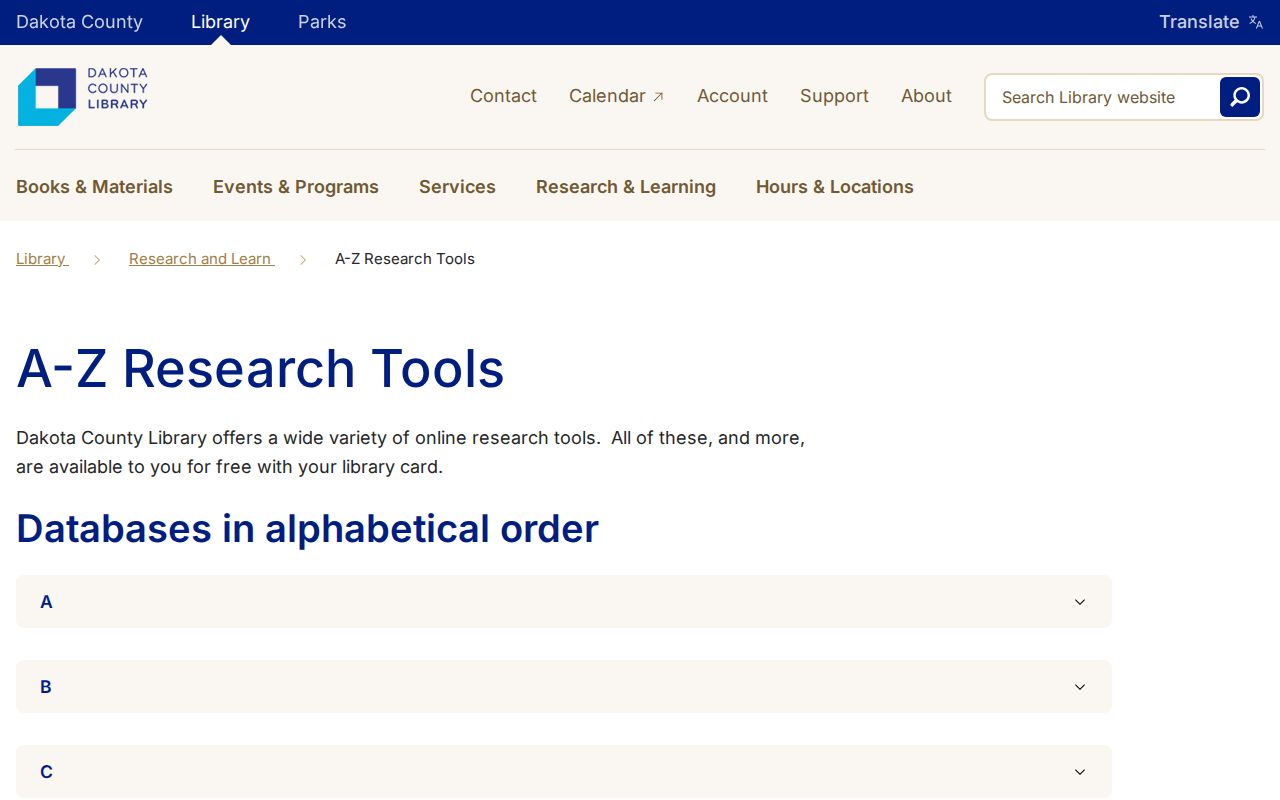
Wescott Library provides the local public-library route to America’s News and in-library Ancestry Library Edition, while a librarian can help identify whether a newspaper, yearbook, or directory lead needs a different custodian.
Trace a Family Through Eagan City Directories
A family history trail works best as a sequence of dated observations. Use the closest available telephone-book volumes around 1964, 1970, 1980, 1990, 2000, and 2010, then note a repeated address, a new address, a changed number, an absence, or a business-only listing. The volume itself is the evidence, so retain its format and reference with the name.
- Choose a known Eagan name or street and request the nearest verified telephone-book item.
- Transcribe the printed name, address, number, year, and page or fiche reference without expanding abbreviations.
- Check the next available volume forward or back, treating missing and yellow-only years as documented gaps.
- Pair the dated listing with the 1970, 1980, 1990, or 2000 federal census at the permitted aggregate or index level; detailed federal census images follow the 72-year public-release rule.
- Use DCHS newspapers, cemetery records, probate material, deeds, or the MNHS death index to investigate a move, death, or other endpoint.
The historical collections themselves are distinct from current address tools. When an old line must be reconciled with a parcel or a current street record, use the modern address workflow on the Eagan Street Directory after preserving the older volume and its date. An absence from a listing can reflect a coverage gap, a move, a different type of listing, or a name variation. It should never be filled with a guess.
Note: A dated directory citation is stronger when it includes the item format and page or fiche reference, not only the year and surname.