
Finding Eagan Resident Records
No single Eagan record answers every question. An address you already know opens the most doors at Dakota County Property Information. A search by address or PIN there returns parcel, tax, building, and plat detail. A name paired with an address fits the Minnesota voter-status form. From there, a court name search adds dates and context. So does an old telephone book or a deed index. Each source has blind spots, though. A parcel owner may list a different mailing address. Plenty of ordinary reasons explain a missing directory listing. So none of them counts as a full household roster.
Start with the record that fits the question. County parcel records settle legal ownership. The City of Eagan portal tracks address-linked permits, and a historical collection holds earlier households. Write down the date and the source beside every result. That small habit stops a current owner from being read as a past resident. It also keeps an old phone listing from passing as current proof.
- Enter the address or PIN in Dakota County Property Information and save the parcel's legal description.
- Compare a known name and address through Minnesota Voter Status Lookup, following its permitted-use limits.
- For a title question, use the legal description in the paid-login RecordEASE system.
- For an older Eagan household, request the correct year from the MNHS telephone-directory collection.
- When no online source holds the public record, send a focused request to the custodian under Minnesota Government Data Practices Act procedures.
Note: A good search log records the spelling, address, portal, date, and coverage note for every lookup, including the ones with no results.
Eagan Offices Behind Resident Records
Eagan lies in Dakota County. Property and recorded-document work therefore starts with county offices rather than any citywide household list. Property Taxation & Records keeps the parcel, tax, and recorder paths. Dakota County Elections runs local election administration. The City Clerk handles city data-practices questions and municipal records. Each custodian keeps a separate system. That is why a careful residents directory search turns to the office that created the record instead of trusting one name hit.
Dakota County Property Taxation & Records
Recorder, tax, parcel, and older-record requests
651-438-4597
Two public Property Information terminals sit in the Western Service Center atrium, run by the GIS office. For books, certified copies, tax research, or a gap in an index, give Property Taxation & Records the PIN or legal description, the document type, and a date range. The full address-by-address chain is laid out in the Eagan street directory.
Eagan Parcels Name the Record
Property Information begins with either a Parcel ID, known as a PIN, or an address. Dashes in the PIN are optional. The record that comes back keeps the property location apart from the owner mailing address. Property Information, Tax Information, and Building Information panels are there to browse. It also links to a printable detail, a tax statement, and the subdivision plat. That structure makes the parcel a dependable bridge. It connects an Eagan street address to a recorded-document search.
- Situs address
- The physical parcel location, not a list of every occupant.
- Owner and mailing address
- The recorded tax owner and correspondence route, which is not proof of residence.
- Legal description and PIN
- Keys for deeds, plats, and tract work when an older document does not use the modern street form.
- Tax and building panels
- Assessment, homestead, and building facts, subject to pending-parcel updates.
Keep the situs address and the mailing address in separate notes. A deed may name a grantor, grantee, lot, or tract and never repeat the street address you recognize. The PIN and legal description connect that Eagan record to a plat or recorder search cleanly, so you never have to guess whether two similar addresses point to one parcel.
- Parcel or PIN
- The county's identifier for one piece of land.
- Situs address
- The physical address assigned to that parcel.
- Index
- A finding tool that points to a record, not always the record image itself.
- Legal description
- The lot, block, tract, or survey wording used to identify land in official documents.
Eagan Permit Search Details
The City of Eagan's OnLama portal offers a second address trail. Basic search takes a street address, a licensed contractor name, a license-holder name, or a reference code. It also accepts a permit, license, or case number. Portal guidance says to enter the address without city, state, ZIP, apartment, or suite details first. Then add a unit on the next screen if prompted. Construction permit data reaches back to 1995, and the data refreshes in real time.
| OnLama search field | Use |
|---|---|
| Address | Street-address search for a location |
| Licensed contractor or license holder | Names connected to a city license |
| Reference or permit number | Direct access when an item number is known |
| Advanced filters | Logged-in keyword, type, Council District, and application-date controls |
The help page covers viewing, printing, watching, and downloading public material. CSV export is capped at 200 results. Searching costs nothing. Application and permit fees still apply. A permit documents activity at an address. It never proves a named applicant lived there.
The Minnesota Secretary of State Business Search displays its name, file-number, status, and prior-name filters for Eagan research purposes. Treat any filing or registered-agent address as a filing address, not a home.
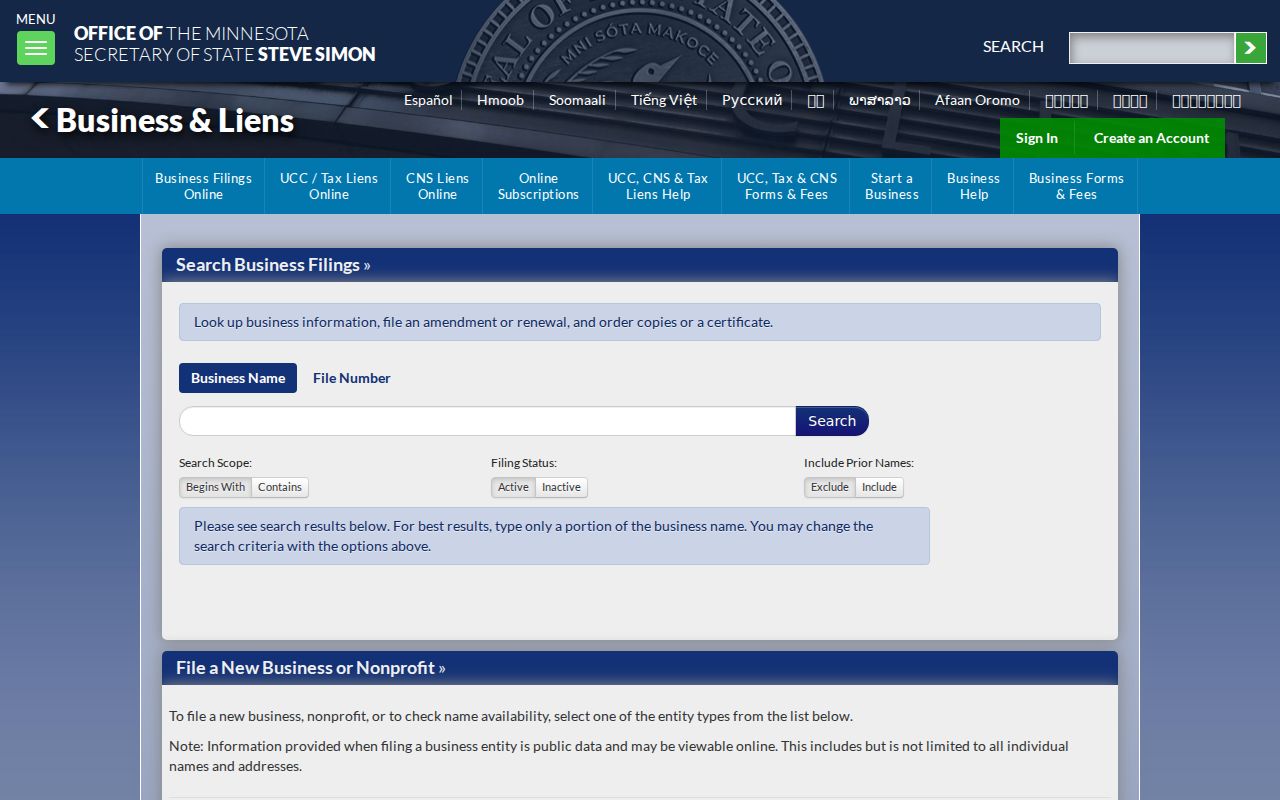
Business filings can support an organizational connection, yet a filing or registered-agent address deserves its own label rather than an assumption that it marks a personal residence.
Eagan Voter Resident Records
The Minnesota Voter Status Lookup is a match tool, not a browsable Eagan roster. It asks for first name, last name, city or township, house number, and street. It also requires either a ZIP code or county. Check the unit box and a unit number becomes required. A result confirms a registration match and points to next steps. Updates run nightly, the state says. Local processing can lag up to 14 days before a change shows.
Minnesota Statutes section 201.091 treats the public voter list differently from the basic form. That list may carry name, residence address, birth year, voting history, districts, and a supplied phone number. Full birth dates and identifying numbers stay out. Getting it requires identification and a written permitted-use statement. A city, county, district, ward, precinct, or street-sorted walking list is available through the official request process. Searchable publication on the internet is prohibited.
Current Eagan Resident Directory Sources
No single Eagan residents directory lists every household in the city. What exists instead are separate record types. Each ties a name to a place in a different way. One shows property ownership. Another confirms a voter registration, names a filing party, or preserves a historical entry tied to an address. The table sorts these roles apart. So each result in a residents directory search can be read for what it truly claims. When one person needs confirmation across several records at once, the focused Eagan resident lookup workflow fits better.
| Record source | Connection shown | Custodian | Access |
|---|---|---|---|
| Property Information | Current owner, parcel, mailing route, tax/building facts | Dakota County | Free portal and public terminals |
| Voter status/list | Registration match or permitted public-list fields | Minnesota SOS and county elections | Address match or restricted request |
| RecordEASE | Parties to deeds, mortgages, liens, and plats | Dakota County Recorder | Login and per-search/document fees |
| OnLama | Address-linked permit, inspection, or city item | City of Eagan | Free basic search, public material varies |
| Telephone directories | Listed name, phone, and street in a historical volume | MNHS | Print or fiche request |
Official records tend to name their custodian and date plainly. A compiled commercial directory is looser with that trail. It can blend stale addresses, similar names, and purchased data lists. It never shows where a fact came from. That breadth is convenient for a quick Eagan street directory sweep, but the weaker sourcing matters. A single exact record from the county, a court, the library, or the city will always support a fact more firmly. A broad category result will not.
| Official Eagan record | Compiled commercial result |
|---|---|
| Identifies its custodian, record type, and date | May combine public filings, marketing data, and older address histories |
| Can be checked with the county, city, court, or library | May have stale entries or attach a fact to a similar name |
| Uses the access rules of the original record | Has its own pricing and privacy practices |
Eagan Resident Court Checks
Minnesota Court Records Online is the statewide route into Dakota County district-court files. It is called MCRO. Its Name tab takes last, first, and middle names, plus a Sounds Like option. It also accepts birth or filing-date ranges, case categories, status, and a county selector. Other tabs work by case number, citation number, or attorney. A public hit can return a case number, the filing date, category, location, party names, status, and docket entries. Notices flag which documents are public.
Remote results are not the official court record. Not every file or document shows up remotely. For paper files or wider electronic access, visit a courthouse public terminal or Court Administration. Certified copies come from those stops too. Juvenile, adoption, sealed, expunged, and other protected material may simply be off-limits. When a name matches, confirm it with a second field. Use court location, date, category, or lawfully visible birth information before treating the case as the right person's.
Note: An empty MCRO result does not prove a person never had a court matter or that every related document is public.
Earlier Eagan Resident Directories
Eagan's strongest historical directory collection is a telephone-book run. It is not a confirmed annual Polk series. The Minnesota Historical Society finding aid inventories Eagan print, fiche, duplicate, and yellow-pages-only items. The items span 1964 through 2011. White pages pair a listed residential or business phone number with an address. Yellow pages group businesses by subject. So a yellow-pages entry never establishes a household the way a white-pages listing does. The finding aid is only an inventory, not a viewer. So request the listed volume or fiche before treating any entry as evidence of a past resident.
The MNHS telephone-directory finding aid notes gaps and oddities. It includes no listed Eagan entry for 1965 and yellow-pages-only material in several later years. For a five-year search, MNHS staff will search one person or business. Fees are City Directories at $10, Telephone Books at $10, or both at $20. Normal turnaround runs three to four weeks, though a twelve-week wait is possible. The fuller collection and tracing method sit on the Eagan city directory page.
Eagan Resident Record Endpoints
The MNHS death-record search covers 1904 through 2001 and works well for an endpoint in a historical Eagan search. Fields include first, middle, and last name, death date, county, and certificate number. Searchers can match with Starts With, Sounds Like, Contains, or Exactly. A result is only an index lead, though. MNHS notes that the data is incomplete and that transcription errors occur, and the full record comes through MNHS microfilm or the proper copy route.
The Minnesota Official Marriage System lists Dakota in its county selector and allows applicant-name and date-range searching. It is an index, not the certificate. The issuing county supplies the official copy. Vital records carry their own access rules under Minnesota Statutes sections 144.225 and 144.226, so a birth, death, marriage, or court record should never be conflated with a general resident roll.
Eagan ZIP Checks Before Searching
ZIP labels narrow a search but never define the city. The strongest city-specific evidence supports 55121, 55122, and 55123 as Eagan ZIP choices. A USPS notice from July 2026 adds one point. The Eagan Sorting and Delivery Center serves 55118 and 55120 through 55123. That wider facility service area is not a municipal-boundary list. For a single address, verify the delivery ZIP with USPS first. Then check the parcel municipality field or the city boundary map for its civic location.
The USPS Eagan facility record supplies helpful postal context. The Dakota County ZIP map serves as a visual reference. Neither one replaces an address-level check. Keep the ZIP, situs address, mailing address, and legal description in separate fields. This matters when a historic Eagan street shows up under a nearby postal label in a ZIP code directory.
Eagan Historical Resident Records
Eagan names from the past sit in two different governments. The township dates to 1860. The city charter came in 1974. Records from each era live with different custodians. The Dakota County Historical Society holds much of the older material. Its collections run deeper than any online portal. Newspaper microfilm goes back to the 1850s. Census materials span 1849 through 1940, and plat ownership maps run from 1879 forward. Church and cemetery files, obituaries, naturalizations, directories, and photographs round out the shelves. An online record search describes more than 500,000 items. Staff still need to check individual years and item access.
One Dakota County lead deserves special attention. That is the Society's 1918 registration index, searchable by last name, first name, and birthplace. A returned row can show age, residence, city, a note, and a microfilm-roll number. It is not an Eagan household roster. A search may return a Rosemount example rather than an Eagan person. Even so, the format works: it moves a researcher from a bare name to a physical roll. Record the spelling, the city, and the roll reference exactly. Then let staff pull the underlying material. Do not stretch a short index entry into a family claim it cannot support.
Keep a short chronology for any Eagan name that crosses these sources. Note the volume or roll date, the locality label, any address or plat clue, and the custodian. A timeline helps. It separates a genuine household move from a spelling variant, a changed record format, or an unindexed gap.
The local setting shapes every search. Eagan grew from farm township to a city. The 2020 Census counted 68,855 people. It was once billed as the Onion Capital of the U.S. A 1964 telephone book shows one town. A 1971 county map, a 1993 deed-index threshold, and a 2011 directory each reflect very different neighborhoods. The Eagan Historical Society's 1914 Town Hall collections bridge those eras. The Dakota County Historical Society does the same for resident lookup work.
Note: Record the format and year of every Eagan source. A fiche-only entry, an unindexed book, or a custody change can explain a blank online search.
Eagan Resident Privacy Requests
Minnesota law gives residents a clear path when an online search stalls. The Minnesota Government Data Practices Act guidance recommends a written request to the responsible authority. Identify the data you want. Include the date range and the address or PIN. Say whether you want inspection, copies, or both. The agency has no duty to build a new list or release nonpublic data. Eagan's policy routes city data questions through the City Clerk. That office targets ten working days for a non-immediate response involving individual data. County and state records belong with the custodian that holds them.
Minnesota Data Access guidance explains the statewide request route and copy practices. It also helps you tell a public record from information that is classified or protected. Some records need extra care. Safe at Home addresses and protected voter information fall in that category. So do private adoption records. Personally identifying details in recorded instruments belong there too.
The state guidance spells out how to submit a public-data request and get a response. It is the best fallback. Use it when a published Eagan residents directory source leaves a coverage gap.
Ask for the smallest record set that answers the question. Then verify any released record with the office that keeps it.